

For Strawberry Plants That Produce A Big Harvest, Follow This Important Soil Tip
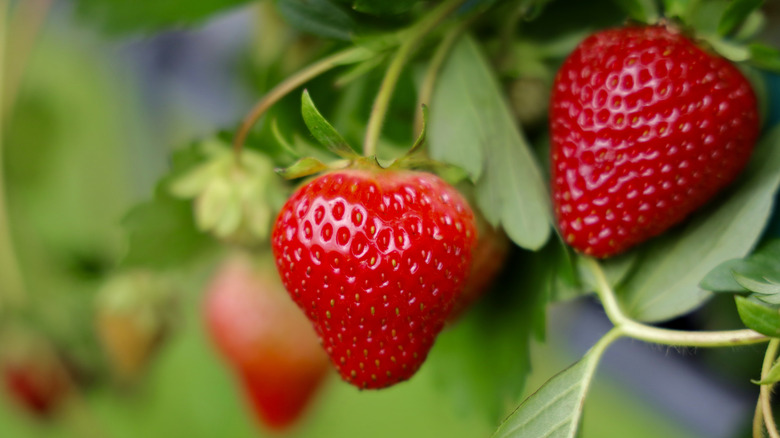
Strawberries are the queen of spring and summer fruit. There's just something about the fresh, floral sweetness that's only there right after they've been plucked. While the best way to enjoy this experience for yourself is to grow your own strawberries in a garden or container, you need to make sure your strawberries' soil is in the best possible shape if you want a truly bountiful harvest.
The watchword in terms of the right soil composition for growing strawberries is balance. Strawberries like slightly acidic soil with just the right amount of nitrogen and moisture. A pH of about 5.5 to 6.5 is perfect for helping strawberry plants absorb the nutrients they need from the soil. Elemental sulfur is the key to making alkaline soil more acidic, and amending your garden with organic compost at the same time helps make the soil more nutritious. Just be sure not to add too much sulfur; a bed that's too acidic can kill your strawberries just as surely as soil that's too alkaline.
As for nitrogen content, this particular nutrient is what fuels leaf and runner growth. That means less energy to devote to fruit production, which isn't ideal when you're hoping for a bountiful harvest. Stick to balanced, low-nitrogen fertilizers during the early part of the growing season, saving nitrogen-rich feeds for late summer after fruit production has slowed.
Making proper amends with your strawberries' soil
To accurately determine the pH of your garden's soil, purchase a pH test kit from your local garden center. These kits contain testing vials and powdered chemicals pressed into tablets or contained in capsules. When mixed with your soil samples, the chemicals change color and indicate the pH of your sample soil. Test kits also usually contain color charts you can compare to the test vials to accurately determine how acidic or alkaline your soil is. You can then amend the soil appropriately with elemental sulfur, as mentioned, or with ground limestone to correct soil that's too acidic.
As for fertilizer, most formulas are balanced with a 10-10-10 ratio of nitrogen, phosphorus, and potassium. To encourage strawberry blossoms and fruit growth instead of leaves and runners, look for a 5-10-10 formula instead. That way, you provide your strawberries with the right amount of nitrogen to thrive, but not so much that the plants prioritize foliage production over fruiting.
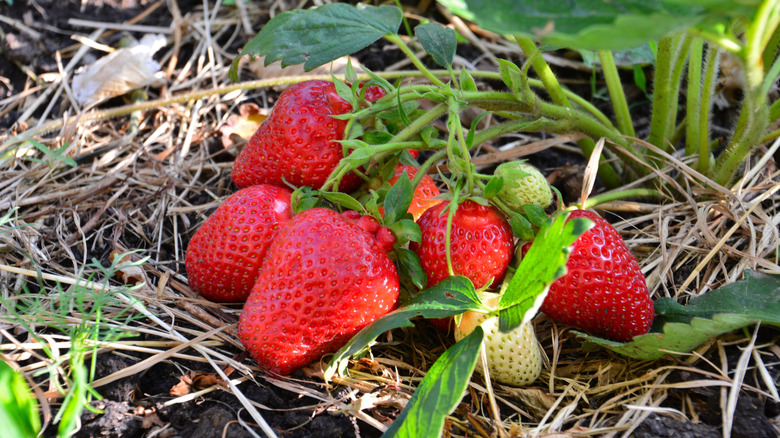
After your soil is nice and balanced, it's a good idea to cover it with a layer of fresh mulch, even if you're growing strawberries indoors. Not only does this help protect the soil you just amended, it also helps keep moisture from evaporating too rapidly and gives your strawberries a nice, clean cushion to rest on, which can prevent rot, blight, and infestations.