

Don't Purchase That Thrift Store Cast-Iron Pan Until You Give It This Test
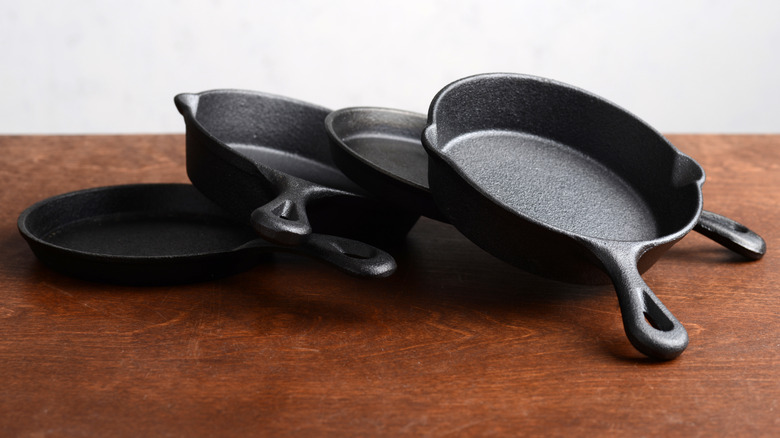
Whether you're just starting out in a new apartment or looking to add some pieces to your already-established cookware collection, it always pays to shop secondhand before you buy anything brand new. Thrift stores, yard sales, flea markets, and estate sales are filled with durable pieces that were made to last and may outperform many of today's mass-market pots and pans. Cast-iron pans are a particularly smart thrift store pickup, and can actually be better than buying new. However, there's one easy test you should do before grabbing a cast-iron pan at the thrift: Put it on a flat surface to make sure it's not warped.
Thrift stores are full of cast-iron pans, and a lot of them were donated because they're warped, so check them carefully before you buy. Find a shelf or flat surface nearby, place the pan down, and gently press anywhere along the outside rim. If the pan is warped or uneven, it will rock, spin, or wobble, which is a no-go. If you can place the pan at eye level, you can also check for visible bowing between the bottom of the pan and the shelf. If you can't find a flat surface nearby, you can also flip the pan over and place the edge of a credit card perpendicular to the center — if you can see any light pass through between the card and the pan, it means the surface is uneven and warped.
Testing secondhand cast iron pans
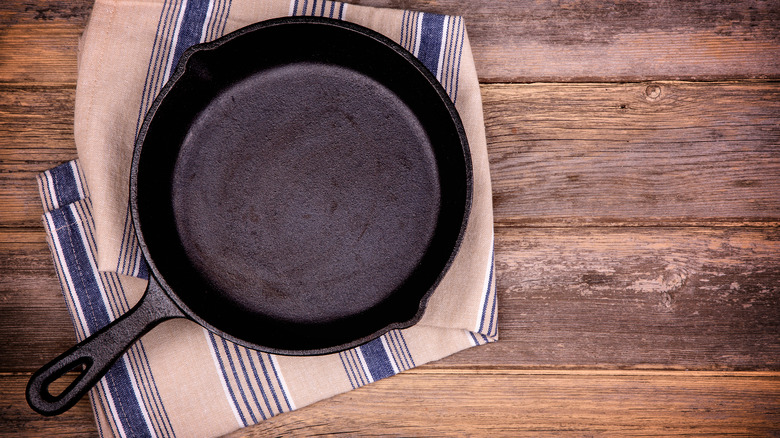
Despite all of the many myths you may have heard about cast iron, it's actually pretty hard to truly destroy these pans. The dense, thick metal is capable of withstanding high heat and lots of use, and doesn't have a nonstick or ceramic coating that can be scratched. Even if you come across a secondhand pan that looks rusty or comes with a lot of baked-on buildup, it can oftentimes still be cleaned up and re-seasoned. With that said, a warped pan, which is what happens when the pan loses its shape and becomes bowed on the bottom, is unsalvageable. The problem with a warped pan is that it can't make proper contact with the burner, which will cause uneven heat and cooking.
If you find an unwarped pan at the thrift store for a fraction of the original price, congratulations! However, don't bring it home only to warp it yourself. Warping is caused by exposing the pan to improper heating and cooling. One of the most common ways home cooks do this is by tossing a hot pan into a sink filled with cold water (which can also crack the metal). Warping can also happen by leaving an empty pan on the stove for too long over high heat. Be sure to heat and cool your cast iron cookware gently, and it'll be solid and steady for years to come.