

Follow This Rule Of Thumb When Buying Coffee Beans In Bulk

As every well-educated coffee snob (guilty) can tell you, the best cup of home-brewed java comes from whole beans, and whole beans only. Those few extra seconds dedicated to grinding your coffee fresh when making your morning cappuccino or latte (yes, they're different) makes a huge difference when it comes to flavor, creating a deep, rich, nuanced brew that should have you buying whole beans in bulk. However, getting quality whole coffee beans isn't quite as simple as filling up a weekly 2-pound paper bag in the bulk section of your grocery store.
In addition to understanding the differences among the many types of coffee beans available, it's important to check your selection for signs of high-quality processing — not just in terms of aroma or appearance, but texture. Beans that feel oily to the touch could indicate they're burned rather than roasted, and will produce a bitter brew. Dry beans with a silky-smooth texture are what you want for the best flavor. To test this at your local grocery store (which likely has the most accessible and least expensive options), simply dispense a few beans into your hand and feel them.
If they leave slippery residue on your skin, pass on that particular variety. When buying local or purchasing beans online, see if the vendor is willing to provide a small sample of its products. You may have to pay a small fee, but it's still less expensive than bulk-buying right away and discovering you've received low-quality beans.
Storing beans in bulk for best results
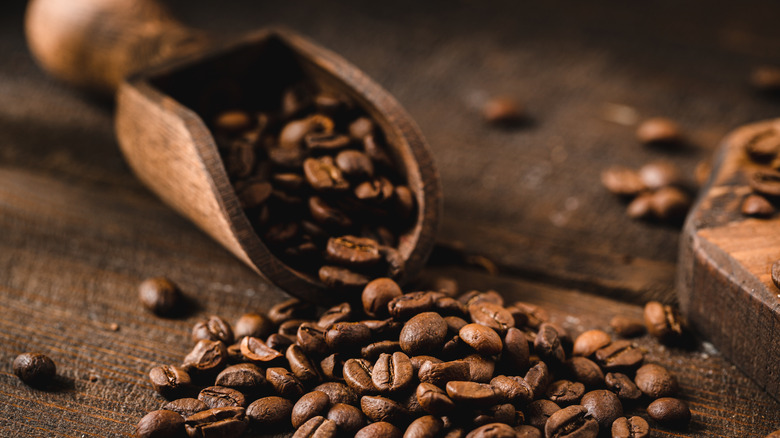
Once you've found a vendor that reliably produces properly roasted beans that don't leave your fingers greasy and slick, it's important to store them properly to preserver their flavor and aroma. After all, whole beans are an investment, and it's important that every creamy moka pot latte, flat white, or plain black cup o' joe is packed with all the flavor you're expecting.
If you're buying from the aforementioned bulk section of your grocery store (which don't usually offer an option to vaccuum-seal your beans), the best way to do this is to keep them in an airtight container in a cool, dry place. Large, thick-walled ceramic containers are perfect for this since they let you keep your coffee within easy reach on the counter while insulating your beans and protecting them from light damage. Though it's tempting to show them off in a glass container above your stove, exposing them to light and heat is a good way to ruin expensive coffee.
Storing prepackaged beans long-term is a little easier since they usually come in vacuum-sealed containers, which are great at preserving freshness. Pop them in the freezer until you're ready to break that seal to prevent temperature fluctuations in your home from spoiling them. Chest freezers work great for larger bags of coffee (2 pounds or more), but apartment-dwellers may have to get a bit creative. Multiple smaller bags (1 pound or less) may be easier to stow in a standard fridge-freezer combo since you can stack and rearrange them to mingle with other frozen goods.