

How To Cook Porterhouse Steak So The Inside Stays Irresistibly Juicy
We may receive a commission on purchases made from links.
Steak is a point of pride for many chefs. Tackling one with skill takes an understanding of temperature, how to season and prep protein, and, of course, how to develop flavor during the cooking process. For home cooks, it's a badge of honor, too, but it can also be intimidating. The truth is, whatever technique you go for, you'll likely get decent results as long as you know what you're doing. But the sheer volume of methods out there can be confusing. If you ask us, cooking a great steak doesn't have to be that complicated. All you really need is a simple, three-stage process, and you'll be able to tackle any cut the butcher throws at you — even the mighty porterhouse.
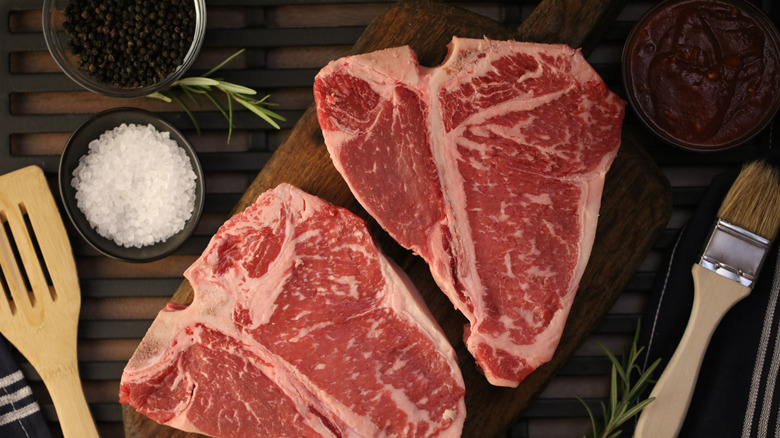
This sizable steak, also known as the T-bone, is one that can cause stress for a lot of home cooks. It's expensive, for starters, but it also contains two steaks in one: On one side of the bone, the filet, and on the other, one of Anthony Bourdain's favorite cuts, the sirloin. But really, there's no need to be afraid of it, because the porterhouse is actually among the easiest steaks to cook. That three stage method is the key: first, a hard sear, to develop color and flavor. Then, a quick roast in a hot oven, before finally, a long rest to keep things tender and juicy. That, and a good lick of salt, is all you really need for a truly great steak. It's that simple.
How to nail the three-stage cooking method
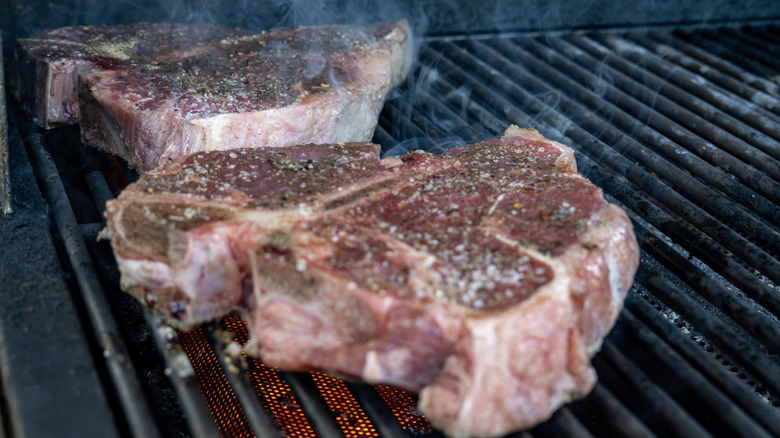
Acing the cook on a piece of beef is about balancing the crust with a perfectly tender, moist interior (the margin of error between perfectly cooked and overdone can be slim). The porterhouse, though, has a trick up its sleeve. Because of its signature bone, the two steaks are partially insulated from the heat and will cook slower as a result. This means that you can get away with a super hard sear right from the start, which will net you some lovely color (and flavor) thanks to the Maillard reaction, which is responsible for browning.
Get your grill cranked up high, or preheat a heavy-bottomed pan on high with a generous amount of oil. For the most consistent results, start by placing the meat upright, so the bone is in contact with the heat. This helps avoid undercooking the very centre of the steak, where it meets the bone. After a minute or so, sear that beef for about two to three minutes per side.
After that, the steak goes into an oven at medium heat (figure around 320 degrees Fahrenheit). Using a meat thermometer like the wireless ThermoPro TempSpike, you can let it cook undisturbed until it hits around 100 to 105 degrees Fahrenheit internally. That might seem low, but the temperature will actually rise as it rests. Once out of the oven, make sure to rest it in a warm place for longer than you might think — we're talking at the very least fifteen minutes. When it hits 120 internal, you'll know you've got a perfect medium rare.
Tips to take your porterhouse steak to the next level
While the cooking process itself is obviously crucial, the real magic is in how you treat your porterhouse before and after you cook it. For instance, you may have come across a technique called tempering, a method that chefs swear by when cooking proteins (and a very simple way to make sure that your steaks come out restaurant-quality). This involves letting your meat sit outside the fridge prior to cooking to allow it to come up to room temperature. When cold meat hits a hot grill, its muscle fibres contract, effectively tensing the meat and making it chewy. To avoid this, let your porterhouse hang out on the kitchen counter for half an hour to an hour before cooking.
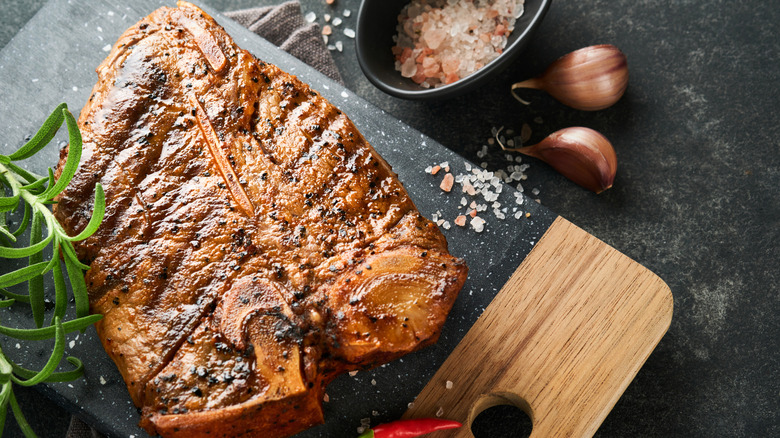
That window gives you plenty of time to focus on seasoning your steak. While some people cover their steak in spices and dried aromats like onion powder, for a beautiful cut like a porterhouse, it's always best to keep things simple: Lots (and we mean lots) of good quality salt, and black pepper. That's it. Trust us. Make sure you salt your steak heavily ahead of time (if you're really serious, up to a day before). This will ensure that the salt penetrates your steak more effectively.
Finally, make sure to carve your meat properly. Once it's rested, remove each cut from the bone with a sharp knife, before slicing it thickly against the grain. This is the unskippable finishing touch that'll make sure that your porterhouse is truly the most tender it can be.