

You Should Absolutely 'Butterfly' Your Next Roast (It's Easy And Adds Intense Flavor)
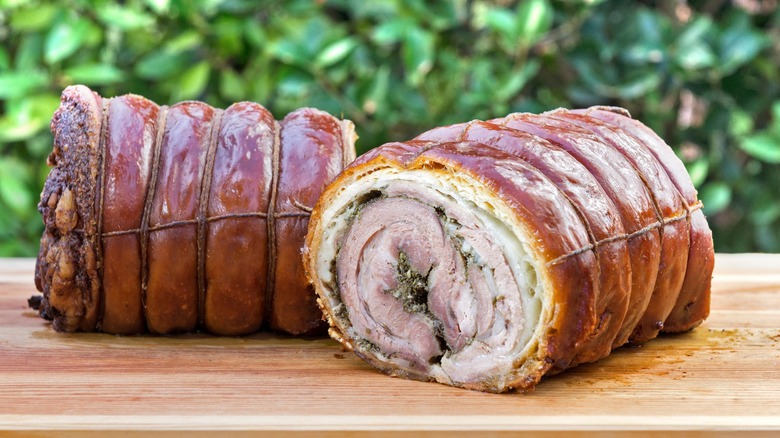
Whether you choose pork, beef, fish, chicken, or a basic roasted turkey recipe, butterflying your roast is the key to packing in lots of flavor. Pork and beef are delicious with this method, accompanied by indulgent holiday sides, such as a French onion-style green bean casserole, even if they skew a little pricier. Of course, that means there's more pressure to execute them perfectly — and roasts are notorious for being succulent one minute and disappointingly dry the next.
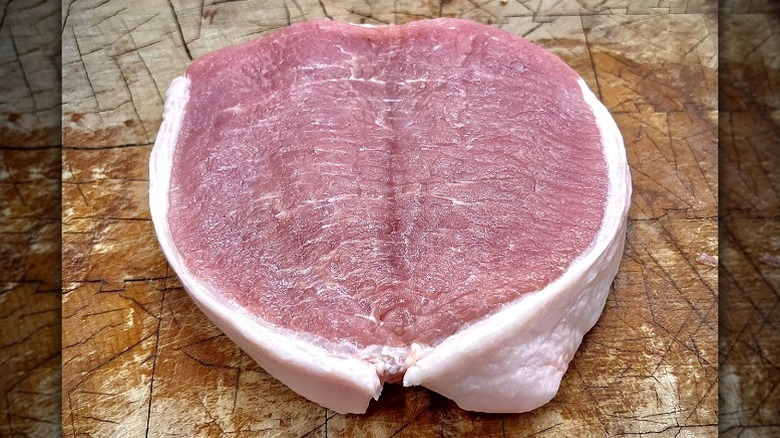
Butterflying your roast combats this potential disaster. Center your roast on a large cutting board with the longer edges parallel to the left and right edges of the board. Glide a thin, very sharp knife along the right side of the roast, aiming to have about one-third of the roast's thickness below the knife, and two-thirds above. Continue cutting to about 1 inch away from the left edge of the roast and open it like a book, with the left side of the book being thicker. With your knife parallel to the board, cut into the thicker half and unfold it, once again in a book-like shape.
Once finished, you should have a beautiful slab of meat of even thickness from edge to edge. This cut may be a little complex for beginners, but it allows you to add fat and seasoning to a larger surface area. This not only makes for a tastier finished dish but also helps keep the roast juicy from the inside out.
Seasoning and cooking your butterflied roast
In terms of how to season a butterflied roast, the sky is really the limit. If you're butterflying a pork loin, you can take inspiration from your favorite slow cooker pulled pork recipe and season it inside with plenty of melted butter, chili powder, ground cumin, and a pinch of cinnamon and brown sugar. Roll the loin up scroll-style into a gorgeous roulade of deliciousness, tie it off with butcher's twine, and season the outside with another layer of butter along with salt and pepper. Be sure to let it rest for around an hour, so the flavors have time to marry. You'll have a beautiful crust with immensely flavorful seasonings on all sides of the meat.
Similar seasoning rules apply to a beef roast — just pick flavors that complement beef, and rub them all over the inside and outside of the roast. Beef tallow is the obvious fat to pair with a beef roast, but butter is also a good choice. It's pretty easy to build your own compound butter for steak, and you can do the same thing for a beef roast. Fresh herbs and roasted garlic are natural pairings here, but you can also opt for your favorite steak seasoning or get really wild with a pomegranate-infused protein rub. If your roulade has a thick, fatty cap, be sure to position it facing up during roasting so that all that lush flavor and lovely moisture sink back into the meat.