

The Unexpected Veggie Chefs Use To Make An Elegant Pizza Sauce At Home

Serving as an alternative to classic tomato sauce, squash is a decadent and less acidic option to elevate your next recipe for pizza night at home. You may not have thought to swap the two, but it's highly lauded as one of the unexpected recommendations chefs have for pizza that's actually delicious. Consider the ways that many ditch the all-too-popular tomato soup for a warming roasted butternut squash alternative in the fall months, for example.
Incorporating squash into your standard tomato base is an easy way to elevate your pizza, where ingredients could be pureed together. Or you could nix the tomatoes entirely, taking the opportunity to highlight different types of squash instead. Butternut squash makes for a silky smooth base, while zucchini can be turned into a creamy alternative. Acorn squash is another lovely option, with its mild, watery texture — this variety could be slow-roasted and mashed.
Whether you bake your squash first and then throw it in a blender, or choose to shred it and cook it down in the pan for more texture — either makes for a great sauce alternative. In order to make the most of this ingredient, you'll want to be sure to incorporate a good deal of earthy herbs and spices to round off those warm, nutty flavor notes. This could be nutmeg, allspice, and cinnamon, as well as ginger, sage, and thyme.
How to make the most of squash in your pizza
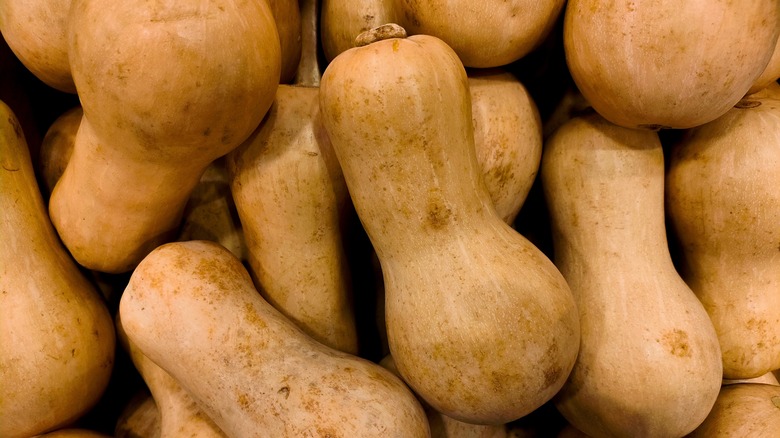
When properly prepared, squash can present a flavorful, smooth finish, comparable to tomato-based sauces. For example, with notes that lean ever so honeyed — the nutty taste of butternut squash is likened to that of a smoother, less sugary sweet potato alternative, rendering this vegetable very complementary to other standard pizza components like garlic and onion. A lot of people get the humble squash wrong, assuming that it is an inherently boring vegetable. But really, it comes down to attention to detail during preparation and carefully choosing the right pairings, which help draw out its flavor.
This novel sauce can be carried out with either fresh or frozen squash. The decision here lies in one's personal preference, though remember that its texture can change during the freezing process and become mushier. And if you're choosing fresh, you'll want to make sure you understand the tell-tale signs of a ripe squash; otherwise, the flavor and texture of your pizza sauce could be thrown off by underripe ingredients. For the best quality produce, you'll want to buy when they're in season and aim for local producers.
This autumnal vegetable presents many nuanced flavors that become more prominent depending on how it's cooked and incorporated into your dish. As for pizza topping options, you could lean toward a smoky Gouda and sage atop the squash sauce with some added red onions for bite and flavor. Not only does squash make a phenomenal base, but it can also be integrated as an unexpected pizza topping, like zucchini alongside goat cheese and walnuts. Another stand-out idea is a brown-butter ricotta base with thin shavings of butternut squash on top — take your pick.