

The Butter Alternative You Should Always Keep In Your Pantry
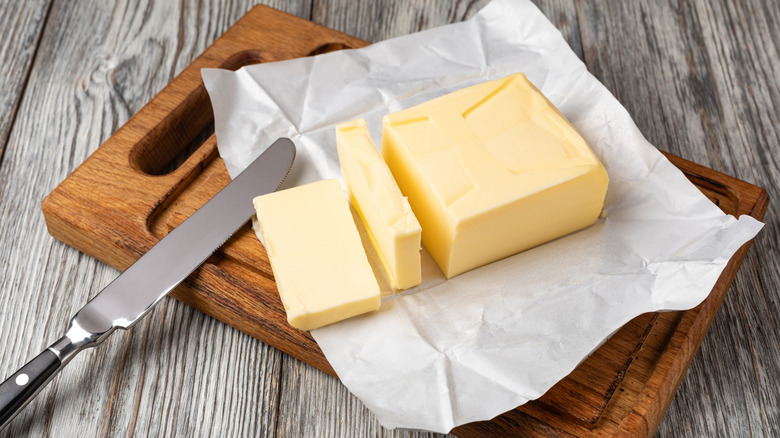
The pantry is often thought of as the place where you keep all your dry foods and seasonings, since they don't really need a temperature-controlled environment to stay fresh. It should also be the home of your new favorite pantry staple, and what might be one of the best butter substitutes of all: butter powder.
Butter powder is essentially dehydrated butter, and the removal of moisture brings with it a load of benefits, chief among which is its prolonged shelf life. It can last for up to a year after its container is opened, or up to five years if left sealed. This is because dehydration inhibits the growth of bacteria and other processes that lead to spoilage. The extended shelf life also makes it a more practical choice over regular butter, depending on how you use it; the lower the risk of spoilage, the less potential for waste.
Dehydration also intensifies the butter, concentrating its compounds to give you more flavor by volume. This makes butter powder an efficient way of adding buttery richness to anything you make. You can, for example, flavor a sauce without adding more liquid, as you might when using regular butter. You could also use it as a topping for all sorts of dishes, or toss it onto some popcorn to get a powerfully buttery snack. In general, you can use it as an alternative to regular butter for any recipe that doesn't rely on its texture for additional fat.
How to make butter powder at home
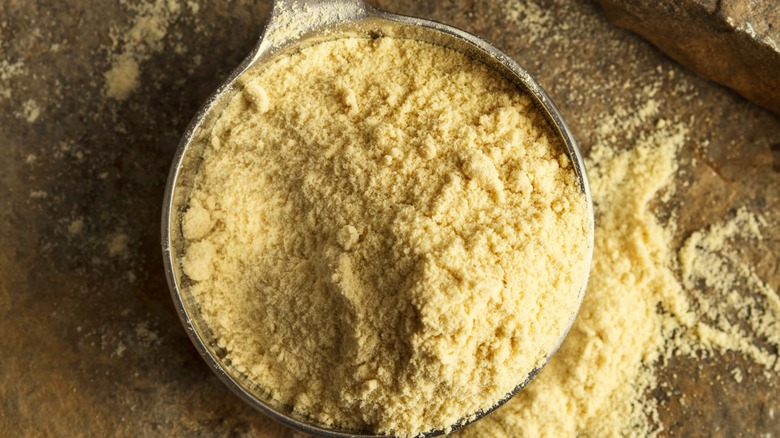
Store-bought butter powder is usually made through a lengthy process known as snap drying. This involves preparing the butter by melting it, then separating the water from the butterfat and milk solids. The resulting liquid is then sprayed onto a hot surface so that all the moisture evaporates. This, of course, isn't really something you can do at home, but there are hacks that can get you close to the real thing.
First, you'll need to get a good non-fat milk powder — this is what will help make your butter dry so that it turns into a powder more easily. You can use any type of butter for this procedure, but it's recommended that you go with unsalted; you can always add salt afterwards. You can also be extra about it and make butter at home while you're at it. Once you have your butter, melt it over low heat, and then blend it with the milk powder in a food processor until it's all smooth. Spread the mixture on a baking sheet afterward so it can dry out, blitz it again, and you've got homemade butter powder. Add in other herbs and seasonings to build your own compound butter in powder form.
Keep in mind that the butter powder you make won't taste exactly the same as what you can get from a store; the milk powder already slightly changes the flavor profile. It will, however, keep about as long with proper storage, so it's definitely worth having in your pantry.