

How Japanese BBQ Differs From Its American Counterpart
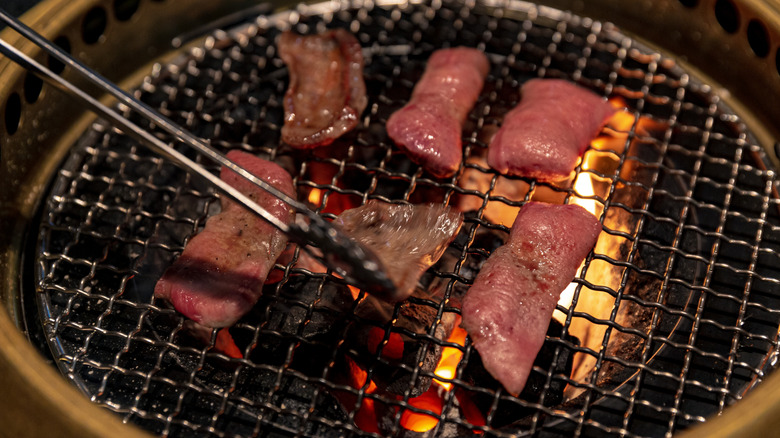
Cooking with fire has ancient origins, so it's no wonder every civilization has developed its own culinary style, especially when it comes to BBQ. In the United States, BBQ typically involves giant steaks and classic recipes like smoky sweet BBQ beef short ribs, along with many side dishes. Compared to its Japanese counterpart, it is a very different experience.
Japanese BBQ has evolved over time and includes distinct styles, including shichirin, irori, and konro. Yakiniku, which translates to "grilled meat," is the most modern and popular, and an adaptation of the South Korean style of BBQ called gogi-gui, which was introduced to Japan during its occupation of South Korea between 1910 and 1945. After World War II, yakiniku grew in popularity due to its affordability during postwar reconstruction.
Similar to American BBQ, yakiniku is a social meal meant to be shared with friends and family. In contrast to the versions stateside, yakiniku is a tabletop grilling experience, where diners cook thin, bite-sized pieces of meat and vegetables while sitting around a grill. Yakiniku sauce is provided for dipping, with steamed rice, lettuce leaves, and edamame served as popular sides.
How American BBQ style differs from Japanese style BBQ
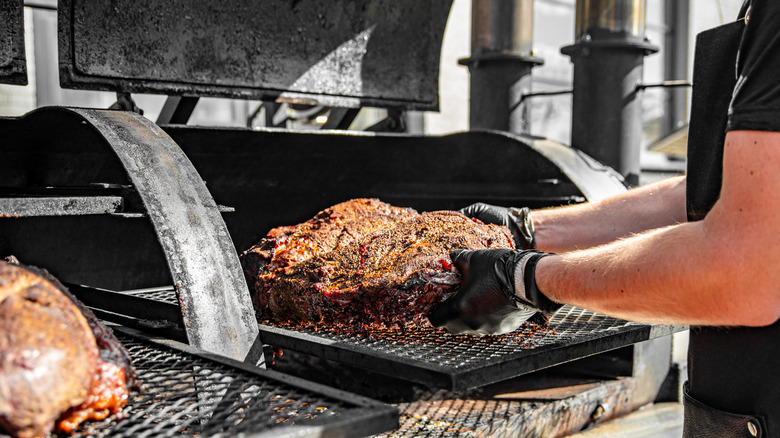
When comparing American and Japanese BBQ, the main similarity is the aforementioned communal setting, as well as the use of wood and charcoal. Beyond that, the two styles differ in several ways, from the thickness of the meat to the types of vegetables and sides served.
As you can guess, the difference in style also makes for different flavors. American BBQ stems from the melting pot of various cultures, with the lower Midwest and Southern states taking the lead in shaping the country's BBQ scene. It typically uses a low-and-slow method of grilling with indirect heat, which allows the meat to absorb the smoky flavors from the fire. The meat is coated in a dry rub to further enhance the flavor — some rubs even incorporate chocolate. This style of BBQ can easily take 24 hours, but if you've had beef brisket, ribs, or pulled pork, then you know it is well worth the wait.
In contrast, Japanese BBQ relies on direct heat and quick cooking. Instead of taking 24 hours, thin cuts of meat are cooked within minutes and served immediately. Dipping sauces are commonly provided, especially yakiniku sauce. Regardless of your preference, either one of these BBQ styles will bring your friends and family running over for dinner.