Click Hereadvertisement
For Those Who Live to Eat

General Chowhounding Topics

Sometimes you find the best beef jerky in the world, and you need to share it

Results will be limited to the last year and sorted newest first.

What is THE dish to judge a cuisine by?

I've found myself judging new (to me) restaurants based on certain dishes and if they don't pass muster I am disappointed even if everything else is okay. Thai it's mango with sticky rice, french it's pate, sushi it's tuna, italian tiramisu, etc. Really there is no rhyme or reason to the dishes that I pick, just those that I enjoy from that particular cuisine.

But is this fair to the restaurant or is there a better way to a restaurant? Are there certain dishes that restaurants SHOULD do well if they are going to focus on a specific cuisine?

Just one of those questions that comes up when I move to a new area and haven't found my go to take out places.

107 Replies so Far

  1. I judge the restaurant by what my favorite dish for that cuisine might happen to be.
    For me, Mexican food is judged by the tacos. Must be shredded beef in a crunchy freshly fried corn tortilla. My husband judges by the enchiladas and our friend by the chile rellenos.
    Vietnamese is judged of course by the Pho and Italian the linguine with clam sauce or stuffed shells.

    If they make my favorite dishes great, it's o.k. with me.

    koko
    www.kokoscorner.typepad.com

    1. re: starkoch

      I'll try and nip this in the bud before the "Mexican Experts" get at this... how many regions in Mexico serve tacos with crunchy tortillas and shredded beef?

      1. re: Blueicus

        it exists

        1. re: kare_raisu

          There is a new Taco Bell in Mexico City.

    2. If I had to boil it down . . .

      An Italian restaurant must not ever overcook pasta or use low quality pasta.

      A French restaurant must not have boring sauces.

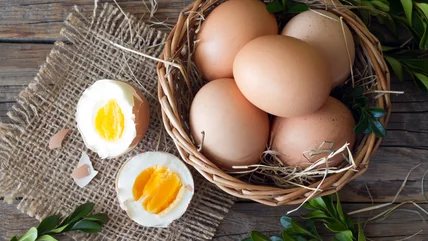
      1. If the kitchen can deliver a perfectly cooked plain omelette there may be hope of a passable meal. Sniff.

        1. re: mrbozo

          Mrbozo, do you know how rare it is to find a perfectly cooked plain omelette in restos? The art of the omelette is one which is nearly lost...

          that being said, I have found one place in Montreal that understands the art of the omelette, although there are currently moving and rental issues, and we are waiting to se when the resto returns... If you come into Montreal soon, I can update you on where to find this lovely omelette, though they usually put some cheese and fresh herbs in it.

          1. re: moh

            Moh, even though I was being a bit snooty in my original post I do believe in the importance of having a solid foundation of the fundamentals of whatever cuisine you are offering to the public at a price (it shouldn't be a cost).

            Your example below of the preparation of broth is a more universal yardstick than the omelette. Unfortunately too many cooks do spoil the broth.

            Once one has mastered the basics, then go ahead and create multicoloured, multitextured, multiflavoured food-based sculptures if you really must. At that stage the "creations" should be at least palatable if not affordable.

          2. re: mrbozo

            I'm in agreement that quality cooking emanates from mastering the basics. Any good Indian restaurant should be able to make a delicious rogan josh. Italians should be able to make an exciting gnocchi or comforting veal parm. The money you drop at a sushi restaurant that can't even deliver a crowd-pleasing tuna roll is probably better spent at a diner that has mastered the elusive art of the burger and onion rings. Unless you've got the foundations, your house of cards of fancy cooking is going to fall down.

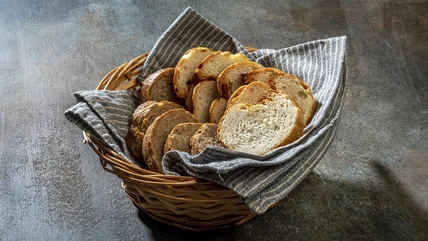
          3. What's in the bread basket weighs heavily. If it's crappy bread, I have good reason to suspect that they don't care much about the rest of my meal.

            1. re: HSBSteveM

              Another basic food worthy of measuring by.

              1. re: mrbozo

                I agree with the bread and rolls. I do not mind paying for the bread, but it should be from a artisan bakery or premise baked if the restaurant is not a chain.

                Soups tend to be another goalpost for a ethnic restaurant. If a restaurant can make their own soups and stock you usually have a winner.

              2. re: HSBSteveM

                (In America) is the bread free or do you have to pay for it. I know you shouldn't expect free stuff at restaurants, but I've come to expect the free bread basket.

                And don't forget the butter. Temp., how served, is there enough for all the bread?

                1. re: viperlush

                  bread is free.

                  only place i remember paying for bread is germany

                  1. re: thew

                    Oops, meant to say "Also (in America) is the bread free or do you have to pay for it?" as another way to judge a restaurant. I've had to pay for it in the US as well as in European cities.

                    1. re: viperlush

                      I recently paid $3.50 for 6 small wedges of flatbread at a tapas resto in Charlotte NC. I thought that was a bit gouging.

                    2. re: thew

                      Interesting. I've yet to pay for bread in a German restaurant.

                    3. re: viperlush

                      I agree about the butter. Sometimes places that might be promising bring out those little foil wrapped butter patties, and as bad as that is, worse is that they're frozen solid.

                      1. re: Judith

                        The cold foil wrapped butter bespeaks lack of concern for quality.

                        I always put some under my right thigh for a couple of minutes to warm it up, just don't forget it's there.

                        1. re: sarge

                          Growing up I thought my mom was very pious, she'd pray before every meal in a restaurant. Several years ago she confessed she was actually warming the butter between her palms and had always wondered why I got quiet when she did it!

                  2. I tend to make heavy judgements on their soup..
                    I find a delicious homemade soup shows alot!

                    1. re: burlgurl

                      Burlgurl, I agree completely with your assessment, and take it one step closer to basic elements. A Resto that makes an excellent broth says a lot to me about the quality of the resto. A fabulous home-made stock, made with real meat and bones, rich with flavour from gelatin - whew! So much better than powders and canned broth! Such a luxury.

                      1. re: moh

                        that stock that you think is a luxury is made mostly from scraps. what that tells me is that whoever runs that kitchen is cost conscious. its about watching their food cost. they get a product from something which otherwise would have been thrown out.

                        1. re: SiksElement

                          " that stock that you think is a luxury is made mostly from scraps"

                          Sikselement, you are of course right that stock is a sign of a cost-conscious kitchen. That is why it is discouraging to have stocks that are obviously not made from scratch. There are also a lot of places with substandard stock and sauces. when I find a place where the stock is delicious, it is a real luxury - because it is harder than it looks to do it well, and because many places seem to take shortcuts.

                          1. re: SiksElement

                            It's not just about the stuff that goes into the stock, but also how they tend to it. Is the consomme properly clarified? Does the tonkotsu broth show that beautiful milky flavour from long simmering of bones? Or on the extreme side, the depth of the broth in a Buddha Jump Over the Wall (which is definitely not made from scraps).

                        2. re: burlgurl

                          it shows that someone can clean out the walk-in and use the stuff thats about to go bad.

                          1. re: SiksElement

                            uh, no. if you try to make stock or soup out of garbage, you end up with garbage flavored stock or soup. soups can, and historically have been, made out of (fresh) leftovers, but certainly not every soup is, and it's a mistake to think that restaurant soups are not carefully composed. soups are often foundation pieces of whole cuisines, there is a world of difference between a crafted soup and something you get out of a can. well-wrought soup is amazing food: accessible, intricate and straight-forward at the same time, as well as adaptable to local and seasonal ingredients. as far as stock goes (as the foundation for sauces and stewed/braised dishes), with most cuisines, if you start with a shoddy stock, you might as well quit right there.

                            1. re: soupkitten

                              soupkitten, I'm having one of my "cranky" days, and getting a bit miffed that I keep having to agree with EVERY WORD YOU WRITE. Seriously, are you bugging my brain somehow? :0

                              Soup is the ultimate peasant food and sometimes it's the ultimate fusion food. It challenges a cook to combine available resources with ingenuity. Sometimes you've got fresh fish, perfect stock and lemongrass to work with and sometimes all you've got is some dried beans, a bone and some water. Grab a handful of herbs from somewhere and maybe a splash of sherry and you'll figure something out.

                              GIGO (garbage in, garbage out) is a valuable lesson to keep in mind while making soup. Soups and stews are my favorite things to cook. Once you have a firm grasp of soup-making principles, recipes are almost unnecessary. I usually just pull all of the leftovers out of my fridge or freezer, arrange them on the counter top and try to figure out how to balance them in a soup recipe. The idea is not to use everything, just to figure out how to combine what will work. Sometimes everyone in the kitchen pitches in with ideas. We argue, we cajole, we bargain, and then come up with a plan. It's the high point of my day, when it works. Last week my cooks came up with an improbable mushroom-chile-chicken-hominy soup that was unforgettably delicious and probably impossible to re-create.

                              And when it doesn't work? Well, they were only leftovers, after all. I'd rather pitch it and learn from the experience than serve a soup that's less than wonderful.

                              Life is too short to eat bad soup.

                              1. re: chefbeth

                                "Last week my cooks came up with an improbable mushroom-chile-chicken-hominy soup that was unforgettably delicious and probably impossible to re-create."

                                Your cooks have good taste... Mushroom Pozole (sans Chicken) is one of the more popular dishes at the Pozolcalli chain during the Central Mexican mushroom season (late April through early October)

                                1. re: Eat_Nopal

                                  Another thing I love about soup is that it's all derivative. No shame in that. If it's delicious, chances are some one some where has come up with it before. It keeps us all connected on a basic level.

                                  Great soup isn't competitive. It's the oposite of that.

                                  1. re: chefbeth

                                    LOL! thanks for the smile today, ChefB. i've been hauling frozen organic chickens around all morning & just found out i need to make soup for tomorrow! (weather is cooling down up here in msp-- time for good soup) no garbage around, wonder what i'll make! :)

                                    1. re: soupkitten

                                      "(weather is cooling down up here in msp-- time for good soup)"

                                      Whoa... whoa... I am of the philosophy that soup has NO seasons...its always good and helps cool you down on a very hot day. From the dry, hot, sunny days in the Puuc Hills of the Yucatan to the steamy jungles along the Mekong... hot soups are a year round staple in very hot places throughout the Tropics & Sub-Tropics!

                                      1. re: Eat_Nopal

                                        We are of the same school of thought, E_N, but you would be surprised at how many customers are not.

                                        That said, a that first frosty day fills my heart with fantasies of "winter" food -- heary soups and stew are the first things I think of.

                                        1. re: chefbeth

                                          E_N, For me winter is for soups and stews just because the oven roasting the bones, then making the broth, then the soup itself simmering just gets my apartment too hot in the summer. When fall comes around I go nuts on soups and stews.

                                          A good broth is the first of the many good things you need to make an outstanding soup. After that, anything goes. I'll bet that the mushroom pozole would be good with pork (what I usually use in my pozole) too.

                                          In the summer I make good cold soups and noodle dishes.

                                          1. re: KailuaGirl

                                            KG... I just got back from Kailua in fact. Coincidentally, we just made an offer on a house there. If we get the place there is plenty of garden space to make soup outdoors... I had not thought about it... until you just brought it up... but I think my first priority might be to set up a Mex style outdoor cooking area.

                                            Now with that said... nothing wrong with Cold soups either... I whip up a mean Uruapan style Avocado soup. Slightly different... but I also like me some versions of Sopa de Frutas... the Gazpacho Moreliano (truly a misnomer)... being fairly high up there.

                                            Regarding the Mushroom Pozole... the point of Pozolcalli's version is to offer up Vegan options... if done right... its not lacking of much... although some nice shreds of roasted pork cachetes wouldn't be so tortorous.

                        3. I judge against some of the dishes that I know and make:

                          Japanese: tsukemeno, simple stuff like niku jyaga/simmered beef and vegetables w/ hot gohan; or musubi and teriyaki; or oyakudonburi; or cold soba; and makizushi

                          Mexican: Tamales or chiles rellenos or turkey mole in their infinite variety and goodness w/ green rice, salsas, and simple sides; also mondongo, refried beans

                          "Chinese": (again, my indicators!) Steamed fish w/ ginger, scallions, black beans; sesame duck and noodle salad; rice noodles and fresh spring rolls.

                          Lao: laab, greens, khao niyao, spicy diced water buffalo cooked in blood

                          Italian: carpaccio, home made ravioli, and fruit ice creams replaced in natural peels or forms

                          American: Kansas City style BBQ, fish cioppino, burgers

                          French: (no way!) salad nicoise, pamesan souffle, pate, potage cressonnier, anguille a la creme or raie au beurre noir or medaillones ou noisettes de veau or a simple ragout de mouton printanier, rognons in any of many forms, and rissoto de caille, charlotte....

                          Filipino: bulalo, sinigang ng kanduli, panikbet, sisig, fresh lumpia, dinaguan, embutido

                          Viet: pho, stuffed bitter gourd, fish baked in little hammered dishes from Hue

                          Peru: ceviche Amazonica, antecuchos,

                          Colombia: sancocho, patacones

                          Bhutan: emadashi

                          Nepal: momos

                          India and Burma: tandoori naan/roti (and my curries against those of India)

                          Bolivia: saise, fresh pan campesino, goat cheese from the altiplano

                          Brasil: manisoba & pichana

                          German: wurst, kartoffelsalat, sauerkraut, und bread

                          UK: yorkies, roast beef

                          Mozambique: chicken piri piri

                          Kenya: m'chuzi wa kuku and ugalli

                          1. re: Sam Fujisaka

                            Sam: dang. you are the hound.

                            1. re: Sam Fujisaka

                              Sam,

                              What's a yorkie?

                              1. re: Sharuf

                                it can be
                                (a) a yorkshire pudding, or (b) a chocolate bar

                                1. re: kmh

                                  Yorkshire pudding

                                  1. re: kmh

                                    or (c) a small dog just the size of a roasting pan! KIDDING!

                                2. re: Sam Fujisaka

                                  If you are judging Filipino restaurants particularly on their dinaguan and sisig, it's no wonder you are not a bigger fan of the cuisine! Like many of their vinegary dishes, they are foods best enjoyed in the home of a hospitable and excited cook. I should hope, also, that you're a little generous in judging the Mexicans' preparation of mondongo since that is more of a Caribbean thing. However even if you're judging by their menudo, I don't know how many Mexican cooks can hold up!

                                  As an aside, wenn man "bread" in Deutschland will, sagt man "Brot."

                                  1. re: JungMann

                                    Jungmann, don't know if you'll see this, but I ate filipino foods in the extended family home of a woman I was with for many years, not in restaurants.

                                3. Sam,

                                  With all due respect, it is perhaps because they have to meet expectations of people like yourself that South Asians restaurants can never claw themselves out of the Ninth Circle of Hell they find themselves in. Momos and Nepal? Curries and India? Tandoori naan and roti for Indian nd Burmese restaurants?

                                  I am an Indian, from Bengal, descended from a family settled for generationsin Burma on one side, raised and fed by by Gurungs from the mountains north of Pokhara.

                                  Lets start with the latter: I hae eaten extensively of the Mid-Hills and High country repertoire, and where there iare no Tibetan infuences or tourists, in all the decades until 1980, this momo was not something commonly eatedby the Gurkhas or the peoples [plural] of the Terai, i.e. 90% of the Nepalese. So whose Nepal are we talking about? The Kathmandu of the corrupt adminisrtion and drug addicts that created the terrible resentment which fomented decades of bloodshed that show little respite even now? Hae you tated Nimbu ka chook? Shilam, roasted perilla seed? Would you eat boiled potato dessd in paste of garlc, paste of shilam and nimbu ka chook? That iswhat I woul order frt from a Gorkha restaurant, if run by a group comprising Gurung, Tamang, Limbu. I would ask. Not so if they were Newari or Madhesi, or brahmans rom Kathmandu Valley. These are sme ofthe ways to go about evauating the cuisines of Nepal thus allowing local cooks to shine forth with their respective masterpieces.

                                  Similaly, Do you walk into a restaurant and ask for "European food? Tha'swhat you ae ding when you talk aout "indian" food! If you rely kow enough, you woul be able to walk into a bangladeshi restaurant, now the region of bangladesh that person came from, and get a first class meal o the dshesthat the cooks know how to prepare like a dream. Instead, by pretending to know more than you do, you will walk out with a tenth rate experience. o with all pakistani ad Inian restaurants. Either really earn about Sbcontinenta foo, or don't confuse weird restaurant cooking fr Indian food In that cae, always check that the cook are from pakistan or Punjab, and you will get excellent naan and rotis.

                                  I got really weired out by some reviewers from Chowhound re:Mina of Angon, who knowing nothing about Bengai food how it should be ordered how it should be eaten, the dfferences between Eas ad West Bengal etc. pild up some incongruous mixture o dishes and pronounced themselves well pleased. This harks back also to the absurd reviews churned out by Jay Jacobs in 1985 Gourmet re Mitali,Manhattan.

                                  The bd resl istht genuinely excellent ethnic cooks and restaurants fail to survive, because those who eat have no idea of what is excellent. Sagat w adisma restaurant next to Pongal on Lex & 29th c.1993 but had a genuinely excellent Bangladeshi cook ofhomestyl cooking, whom none ladd. That restuarant is gone! Similarly, there may be such cookson McDonl Ae, but I don't know know about them.

                                  Sam, you need to thoroughly undersandthe forte ofthe indigenouscuiine before pronouncing jdgement. Fr exampe, the Bay rea has may Suth Inian retaurants tha hve nothing to do with naas. Saravana Bhavan etc. there serve Suth Indan pecilties. There are others that serve Gujaati speciaties, others that serve chaat. Paisai places that specialize many in Nihari. Go to Aladin [one D] in LA:it speciaizesin paatha an cerain types of chicken curries that are THE STANDARD for those types whether or not you understand that. The worldof Indian food & foodways is larger than your universe, and it seems a bit too presumptuous to keep it confined within your limited comprehension.

                                  1. re: mousey

                                    Namaskar! mousey, I understand what you're saying. Be reminded that I do not live in the US and am only talking about eating in the respective countries.

                                    My opening statement was that I enjoy comparing dishes I eat in different countries to what I prepare at home. I did not include ALL of the many different foods and dishes that I've eaten in the different countries--only what I commonly prepare.

                                    I've worked a lot in the Terai of Nepal, in the rice-wheat areas of India, and throughout Bhutan over many years. I enjoy all of the foods that you mentioned, but do not cook them all.

                                    My dishes for Japan are what I normally prepare--not the things that most people might know and think of as Japanese food.

                                    I enjoy all of the foods I eat in Mexico, Pakistan, Mozambique, Laos, Vietnam, and elsewhere, but do not prepare them all. In other countries, I only prepare the dishes I like--because I don't like them all (e..g, I really don't like sun dried pork fat and yak butter tea in Bhutan; or arepas in Colombia, or mashed potatoes in the country that you appear to live in).

                                    1. re: mousey

                                      Also, I do not know about the Indian/Burmese/Ghorka food in restaurants in the US. I've eaten in Ghorka areas of Nepal, in Pokhara, all over India for more than a combined pair of years. As to momos, for example, I learned to make them from one of my ex-PhD students from Nepal who was attending the University of the Philippines at Los Banos. Similarly, I learned to make almost all of the other dishes mentioned from local cooks in each of the respective countries over amany, many years (I am, as you can conclude, an old fart--and as to being a tourist: because of my work, I never travel if not for work. Never!).

                                      1. re: mousey

                                        "Sam, you need to thoroughly undersandthe forte ofthe indigenouscuiine before pronouncing jdgement."

                                        Mousey, your post is very informative, and I greatly appreciate your points. For what it is worth, I would say that Sam was not presuming to judge or minimize the indigenous cuisine of Nepal or India in any negative way. I can vouch for the fact that Sam is one of the least judgmental and also one of the most open-minded hounds on the board. His palate is broad, as is his breadth of knowledge. But all of us, including Sam have limitations in our experience. As much as I would like to be an expert in every cuisine under the sun, there is only so much time and money and eating space in our stomach!

                                        The vast expanse that is the sub-continent of India continues to amaze and fascinate me. I am always amazed by the variety of cuisines, ingredients dishes, etc. that are available. My husband had the chance to visit India once, and marvelled at the number of different provinces and the different cultures throughout India. It was then he realized how simplified our Western notions of this grand country were. I have never had a chance to visit, but would love to go some day.

                                        The level of knowledge and appreciation of the cultures of India is improving in North America. We have greater access to authentic ingredients, vegetables, spices. There are many more well-written English-language cookbooks that explain various regional differences. The Web has been a great resource for understanding these regional variations as well.

                                        Every cuisine needs their proponents. Look at the influence of Julia Child on the level of understanding of French cuisine in North America. just to name one important example. A passion for education can go a long way in expanding our palates and our experiences.

                                        You clearly have a depth of understanding of Indian cuisine that many of us on this board do not have. I strongly encourage you to continue to post, and to share your great knowledge with us so that we can all embark on this exciting journey of discovery. We need and welcome your expertise. Start some threads on different regions in India, for example, "what is your favorite Bengali dish?" Get us talking! Tell us about how you approach each cuisine, what are its unique qualities. Help us expand our culinary universe, be our expert on the regional cuisines of India. This board can only be as useful as its participants. There are many wonderful posters already present on this board who are very generous with their expertise in certain cuisines (Hannaone and his Korean recipes, Eat nopal and his insights into Mexican cuisine, and Silverjay with his thoughtful posts on Japanese cuisine and culture pop into mind, but they are only 3 of many such regional experts). They and other experts posters are key in expanding us regular posters, both in knowledge and in pant size!

                                        One last thing: I am going to warn you now, that some of us are going to post some stupid statements out of sheer ignorance. We just don't know that much! But we are willing to be corrected! Please please please, try to be patient with us. We aren't necessarily trying to be presumptuous or judgmental, we just may not know better. So teach us gently. And then maybe more of those excellent ethnic restaurants will survive and even thrive.

                                        Mousey, I really hope to see more of your posts on the board soon! Perhaps you'd consider commenting on this recent thread of mine, of some vegetables I was trying to identify and cook with:

                                        http://www.chowhound.com/topics/523351

                                        1. re: mousey

                                          Mousey, your argument that you wouldn't ask for European food can go down to every cuisine. Italy has its' different regions, as does just about every other country. Look right here in the USA, is a hamburger what we should judge American food by? There are so many specialties from each state/region that it's impossible to know of them all.

                                        2. My problem is I can't count the years since I've found a restaurant that is consistent, let alone has more than one or two dishes to use to judge their overall quality. Then there is the added variable of which cook is in the kitchen today?

                                          I've been thinking of writing a revue of a local sushi resta